
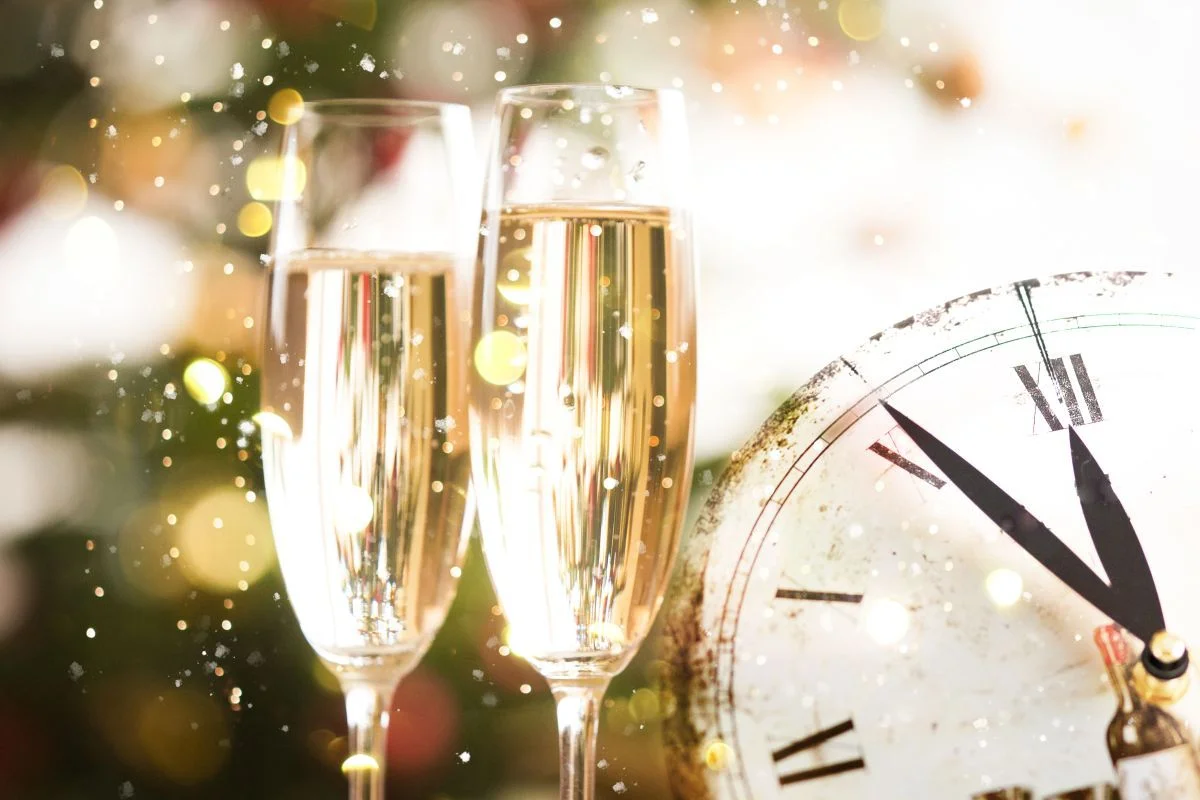
On New Year’s Eve, we all wish for the coming year to be better — or at least as good as the previous one. Many of us attend celebrations: some choose elegant New Year’s balls, while others enjoy house parties or outdoor events. Before we start counting down the seconds to the New Year, let us take a look at where New Year’s Eve traditions come from and why people around the world celebrate in such similar ways.
The Sibyl’s Prophecy – The Origins of New Year’s Eve
The tradition of celebrating St. Sylvester’s Day is much younger than Christmas itself, whose history dates back to the 3rd and 4th centuries. Before the year 1000, people most likely did not celebrate the passing of the old year and the arrival of the new one. This changed at the turn of the years 999 and 1000.
For Romans and other Christians, the year of the “three nines” was considered extraordinary because the prophecy of the Greek seer Sibyl foretold the end of the world with the arrival of the new millennium. But what does this prophecy have to do with the origins of New Year’s Eve?
According to Sibyl, in the year 1000 the heavens and the earth would be destroyed by the monster Leviathan. Earlier, in the 4th century, the creature was supposedly sealed with a papal mark and imprisoned in the dungeons of the Vatican by Pope Sylvester I (who, interestingly, died on December 31, 335). The prophecy claimed that in the year 1000 Leviathan would awaken, break the seal, and escape from the dungeons, breathing fire and bringing about the destruction of humanity. Falling stars, the sun, and other celestial bodies, as well as the Last Judgment, were also meant to accompany the apocalypse. Unsurprisingly, the prophecy caused great fear among Christians.
As the end of the year 999 approached, anxiety grew among those who believed in the prophecy. Christians sought shelter, prayed, and performed acts of penance while awaiting the worst — what we might today call the “millennium crisis.” Fear intensified until it reached its peak during the final hours and minutes of the year 999. Yet after midnight, when the year 1000 arrived, nothing happened. Contrary to the prophecy, the monster did not emerge, and the world did not end.
The people of Rome not only breathed a sigh of relief but also took to the streets to celebrate together by torchlight. The first New Year’s Eve celebration lasted until dawn — a tradition many still follow today. Pope Sylvester II, who was then head of the Church, gave the Urbi et Orbi blessing for the new year, the new century, and the new millennium. Since then, the turning point between years has become an occasion for grand celebrations, while the name “Sylwester” (New Year’s Eve in Poland) honors both Pope Sylvester I and Sylvester II.
Why Is New Year’s Eve Celebrated on December 31?
We already know where the tradition of New Year’s Eve comes from, but why do we celebrate the end of the old year and the beginning of the new one specifically between December and January?
The date and manner of celebration are rooted in ancient Roman tradition. January 1 was dedicated to Janus, the Roman god of beginnings, transitions, gates, doors, and bridges. The Latin name for January — Ianuarius — derives from his name. Janus was depicted with two faces: one looking backward into the past and the other forward into the future.
In 46 BCE, Julius Caesar established January 1 as the first day of the year, reflecting the worship of Janus. On this day, the most important officials in the Roman Republic assumed office, and the calendar of state and religious festivals began. Before this reform, February had been considered the end of the year, while March marked the beginning of a new cycle in nature.
Eventually, the Gregorian calendar introduced by Pope Gregory XIII in 1582 confirmed January 1 as the official beginning of the year.
New Year’s Traditions in Other Countries
As the saying goes, “Different countries, different customs.” New Year’s celebrations have not always looked the same everywhere.
In ancient Greece, street parades honoring the god Dionysus took place during the night of December 31 to January 1. A characteristic feature of these festivities was baskets carrying children, symbolizing a new beginning.
In Egypt, the New Year began on September 21, when the star Sirius appeared in the sky and the Nile overflowed its banks. The festival known as Wepet Renpet marked the start of month-long celebrations.
The Celts celebrated Samhain on October 31 and November 1, marking the end of summer and the beginning of dark winter.
During the Middle Ages, New Year’s Day fell on various religious holidays depending on the country. In England, Easter and later the Feast of the Annunciation (March 25) were considered the beginning of the year. In France, the date varied by region, while in Poland and Spain, New Year’s Day was celebrated at Christmas.
How Did New Year’s Eve Traditions Reach Poland?
Over time, January 1 gradually became recognized throughout Europe as the administrative start of the new year. Interestingly, New Year’s Eve parties only became truly popular at the turn of the 19th and 20th centuries.
Initially, only wealthy citizens celebrated New Year’s Eve. In the 20th century, the tradition spread to less affluent communities. The custom came to Poland from Germany, and by the mid-19th century, lavish New Year’s balls were already being organized in Warsaw.
For the upper classes, these celebrations included orchestras, elegant dances such as the polonaise, midnight toasts, and luxurious dinners by candlelight. Dancing often continued until dawn — a tradition that survives to this day.
In villages, however, New Year’s Eve was celebrated differently. Rural customs focused more on fortune-telling, symbolic rituals, and family suppers rather than grand festivities. Many practices were believed to ensure prosperity and good luck for the coming year.
Traditional Polish New Year’s Customs
Some traditional Polish New Year’s customs included:
- Young women telling fortunes about love and marriage using melted wax, lead, or tin.
- Predicting the weather for the coming year based on the weather on New Year’s Eve.
- Baking small pastries shared with family members, neighbors, carol singers, and farm animals to ensure prosperity.
- Burning hay bundles to symbolize the passing of the old year.
- Carol singing from house to house in the Beskid Mountains.
- Cracking whips at midnight to welcome the New Year and drive pests away from fields and orchards.
Why Do We Toast With Champagne?
Originally, Polish New Year’s celebrations were not associated with champagne. Toasts were first made with sweet Tokaj wine imported from Hungary, along with mead and homemade wines.
Champagne became fashionable in Poland during the 19th century thanks to the growing popularity of French luxury culture. By the end of the century, aristocratic and bourgeois carnival balls commonly featured champagne — or cheaper sparkling imitations — during midnight toasts.
New Year’s Traditions Around Europe
Different European countries developed their own unique customs.
In Spain, people eat 12 grapes — one for each second before midnight — to bring good luck for the next 12 months.
In Scotland, the tradition of “first-footing” says that the first guest entering a home after midnight determines the household’s luck for the coming year. A tall dark-haired man is considered especially fortunate.
In Germany, some families serve carp on December 31, and fish scales are kept in wallets for prosperity — much like in Poland.
Outdoor Celebrations Around the World
New Year’s Eve is a celebration of passing time, and the countdown to midnight is its most exciting moment. It is a unique time when we reflect on the past while looking hopefully toward the future.
Some of the world’s most famous New Year’s Eve celebrations include:
- Rio de Janeiro, where crowds gather on Copacabana Beach.
- Times Square in New York City, famous for the iconic ball drop.
- Sydney, known for spectacular fireworks around the Harbour Bridge and Sydney Opera House.
- London, where fireworks light up the sky around the London Eye after Big Ben strikes midnight.
- Prague, featuring concerts and dance shows across the city.
How Do We Celebrate Today?
Today, New Year’s Eve is celebrated in many different ways. Besides outdoor events, house parties with family, friends, and neighbors remain very popular. Some people travel to the mountains to welcome the New Year surrounded by snowy peaks and peaceful scenery. Others attend glamorous balls to enjoy elegant outfits and dance all night long.
No matter where or how we celebrate, we all share the same wish — health, happiness, and prosperity for the twelve months ahead.