
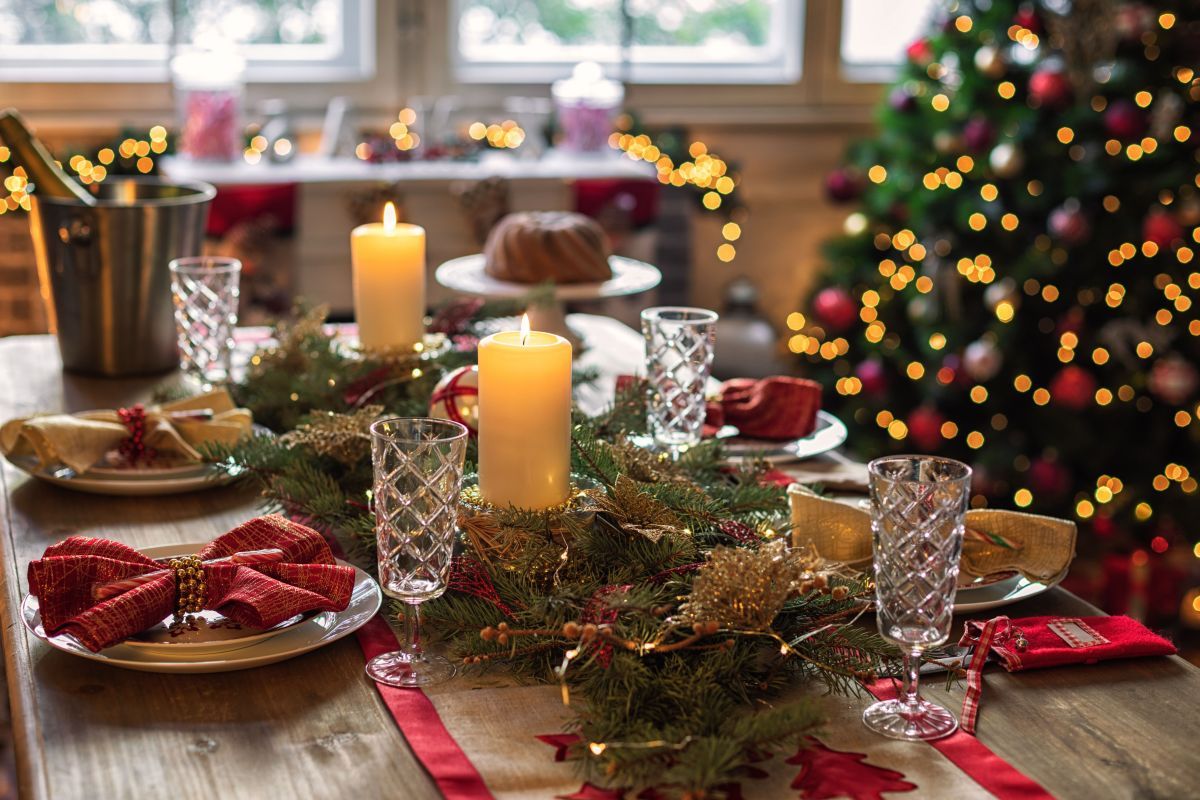
Christmas is one of the most beloved holidays, celebrated in many different ways. Some people spend this time relaxing and gathering with family around a richly set table, while others focus on liturgical celebrations and the spiritual dimension of the holiday. But how did it happen that we celebrate the Nativity on December 25, and where did Christmas traditions come from? Let us discover together the fascinating origins of Christmas!
When Do We Celebrate Christmas?
Christians celebrate Christmas in remembrance of the birth of Jesus Christ. In the Catholic Church, liturgical celebrations take place on December 25, while in Eastern Churches (mainly Orthodox and Greek Catholic), Christmas is celebrated two weeks later, on January 7. This is because Eastern Churches follow the Julian calendar introduced by Julius Caesar.
In 1582, Pope Gregory XIII introduced a new calendar, known as the Gregorian calendar, which is now widely used around the world. In addition to the Christmas liturgy, Catholics also participate in Midnight Mass, traditionally celebrated at midnight between December 24 and 25, as well as the liturgy on the second day of Christmas (December 26), commemorating Saint Stephen, the first Christian martyr.
The First Mention of Christmas on December 25
The Bible does not provide an exact date for Christ’s birth, so historians often refer to apocryphal writings — texts related to biblical themes but not included in the official canon of Scripture.
The oldest known reference to Christmas being celebrated on December 25 comes from the Commentary on the Book of Daniel, written around 204 AD by Saint Hippolytus of Rome. He wrote:
“The first coming of our Lord in the flesh, when He was born in Bethlehem, took place eight days before the Kalends of January.”
He added that this occurred during the forty-second year of Emperor Augustus’ reign, 5,500 years after Adam.
Another early mention appears in the Chronicles of the World, written around 221 AD by the Roman historian and traveler Sextus Julius Africanus. He calculated the beginning of the world as March 25, 5503 BC and claimed that the Annunciation took place on March 25 in the third year before Christ, while Jesus was born on December 25 of the same year.
Since When Has Christmas Been Celebrated?
The earliest references to December 25 do not necessarily prove that Christians celebrated Christ’s birth liturgically on that day. According to experts, evidence of liturgical Christmas celebrations appears in a list of local martyrs (depositio martyrum) created between 335 and 336 AD. This list forms part of the Chronograph of 354, also known as the Calendar of Filocalus.
The text includes the phrase:
“[25 December] eight days before the Kalends of January, Christ was born in Bethlehem of Judea.”
Scholars believe this refers not to the historical event itself, but to the fact that Christmas was already being celebrated by the Church.
Why Do We Celebrate Christmas on December 25?
Contrary to popular belief, Jesus was probably not born in winter. The Bible mentions shepherds watching their flocks in the fields that night (Luke 2:8–20), which would have been unlikely during winter months.
The Greek theologian Clement of Alexandria (150–212 AD) suggested that Christ’s birth may have occurred on April 19 or 20, or May 20. It remains unclear why December 25 eventually became the official celebration date.
One theory links it to the Annunciation, celebrated on March 25 in the Catholic Church. Since Christmas falls exactly nine months later, some believe the date was chosen symbolically based on the traditional length of pregnancy.
However, the more widely accepted theory is that December 25 was chosen to weaken the pagan cult of the Sun god. In 275 AD, the Roman Emperor Aurelian established the feast of Natalis Solis Invicti (“Birth of the Unconquered Sun”) as a state holiday celebrated on December 25.
Christians adopted the same date symbolically for Christ’s birth, emphasizing Jesus as the true “Sun of Justice,” “Light of the World,” and “Light for the Gentiles,” as described in the Bible.
How Did Christmas Spread Throughout the World?
The celebration of Christmas also helped the Church oppose the teachings of Arius, a theologian from Alexandria who denied the divinity of Christ and the doctrine of the Incarnation.
By emphasizing the mystery of Christ’s birth and incarnation, Christmas strengthened orthodox Christian teachings and spread rapidly throughout the Western Church.
Around 360 AD, Bishop Optatus of Milevis confirmed Christmas celebrations in Africa, while by the end of the fourth century the feast was also celebrated in northern Italy. In 380 AD, the Synod of Zaragoza ordered Christmas celebrations in Spain.
By the late fourth century, Christmas had also been accepted in the East. Prominent theologians such as Basil the Great, Gregory of Nazianzus, Gregory of Nyssa, and John Chrysostom all referred to the celebration of Christ’s birth.
In Egypt, Christmas was known by 432 AD, as confirmed by Bishop Cyril of Alexandria. Meanwhile, in Jerusalem and Palestine, January 6 was celebrated as the Feast of Epiphany — commemorating Christ’s manifestation to the world.
To this day, the Armenian Church and some Eastern Churches celebrate Christmas together with Epiphany on January 6.
The First Christmas Traditions
Christmas Eve traditions also have deep roots. In Rome, since the fifth century, midnight Mass (missa in nocte) was celebrated on the night before Christmas.
By the 9th and 10th centuries, religious performances reenacting the Nativity story became popular. In the 16th century, nativity scenes spread widely throughout Europe, although the earliest known nativity display likely appeared much earlier — probably in 7th-century Rome at the Basilica of Santa Maria Maggiore.
Where Did Popular Christmas Traditions Come From?
Many beloved Christmas customs — decorating the tree, exchanging gifts, or serving twelve dishes on Christmas Eve — actually originated in pre-Christian pagan traditions. Christians later adapted and reinterpreted these customs within their own religious context.
Decorating the Christmas Tree
This tradition has roots in the Roman festival of Saturnalia, dedicated to Saturn, the god of agriculture and time. During the festival, Romans exchanged gifts and decorated their homes with evergreen branches.
The custom arrived in Poland from Germany at the turn of the 18th and 19th centuries. Originally, instead of a full tree, people hung a decorated treetop branch called podłaźniczka from the ceiling.
The ornaments symbolized fertility, life, and prosperity, while the evergreen tree itself was believed to protect the household from evil.
Christmas Eve Supper
Before Christianity, Slavic peoples celebrated winter festivals honoring deceased ancestors. During these celebrations, called Szczodre Gody, people prepared meatless dishes containing poppy seeds, nuts, honey, grains, and legumes.
An extra place setting was left at the table for spirits of the dead believed to return home during the winter season.
The Twelve Christmas Eve Dishes
Today, the twelve dishes symbolize the twelve apostles, but the tradition also has pagan origins. Ancient Slavs prepared twelve dishes to ensure prosperity and abundance throughout the coming year.
The meals were made from agricultural products, forest gifts, and fish from rivers and lakes.
Hay Under the Tablecloth
Today, hay symbolizes the stable where Jesus was born. Originally, however, Slavs placed hay around the house to honor deities responsible for good harvests and to welcome ancestral spirits.
Caroling
The tradition of Christmas caroling, especially popular in regions such as Silesia and the Beskids, also originated in pagan winter rituals. Groups of masked visitors went from house to house offering blessings in exchange for food or small gifts.
The Bethlehem Star
Today, the Bethlehem Star symbolizes the light guiding the Wise Men to Jesus. In earlier pagan traditions, however, the star represented the victorious sun overcoming darkness and bringing life back to the world.
Christmas Decorations
Certain decorations also trace back to pagan beliefs. Mistletoe was believed to bring love and happiness, while holly protected households from evil spirits and illness.
Edible ornaments such as apples and nuts once served as offerings for ancestral spirits returning during winter festivals.
Sharing the Christmas Wafer
One of the strongest traditions in Poland is sharing the Christmas wafer (opłatek). The custom dates back to the early Middle Ages, when blessed bread known as eulogiae was shared among believers.
Today, sharing the wafer symbolizes reconciliation, forgiveness, and goodwill.
How Do We Celebrate Christmas Today?
Many traditional customs — attending Midnight Mass, sharing Christmas Eve supper, decorating the tree — are still cherished today. However, the way people celebrate Christmas continues to evolve.
More and more families simplify preparations, order catering, or reduce household chores to focus on rest and spending quality time together.
An increasing number of people also choose to spend Christmas away from home — in the mountains enjoying winter sports, exploring hiking trails, or traveling abroad to warmer climates.
One thing remains unchanged: Christmas is still a special time for reflection, closeness, and focusing on what truly matters most.